Zoey Gong's TCM Food Therapy Protocol
A protocol bridging Traditional Chinese Medicine food therapy with clinical dietetics, emphasizing seasonal eating, warming and cooling food properties, qi-building nutrition, and medicinal soups for everyday longevity.
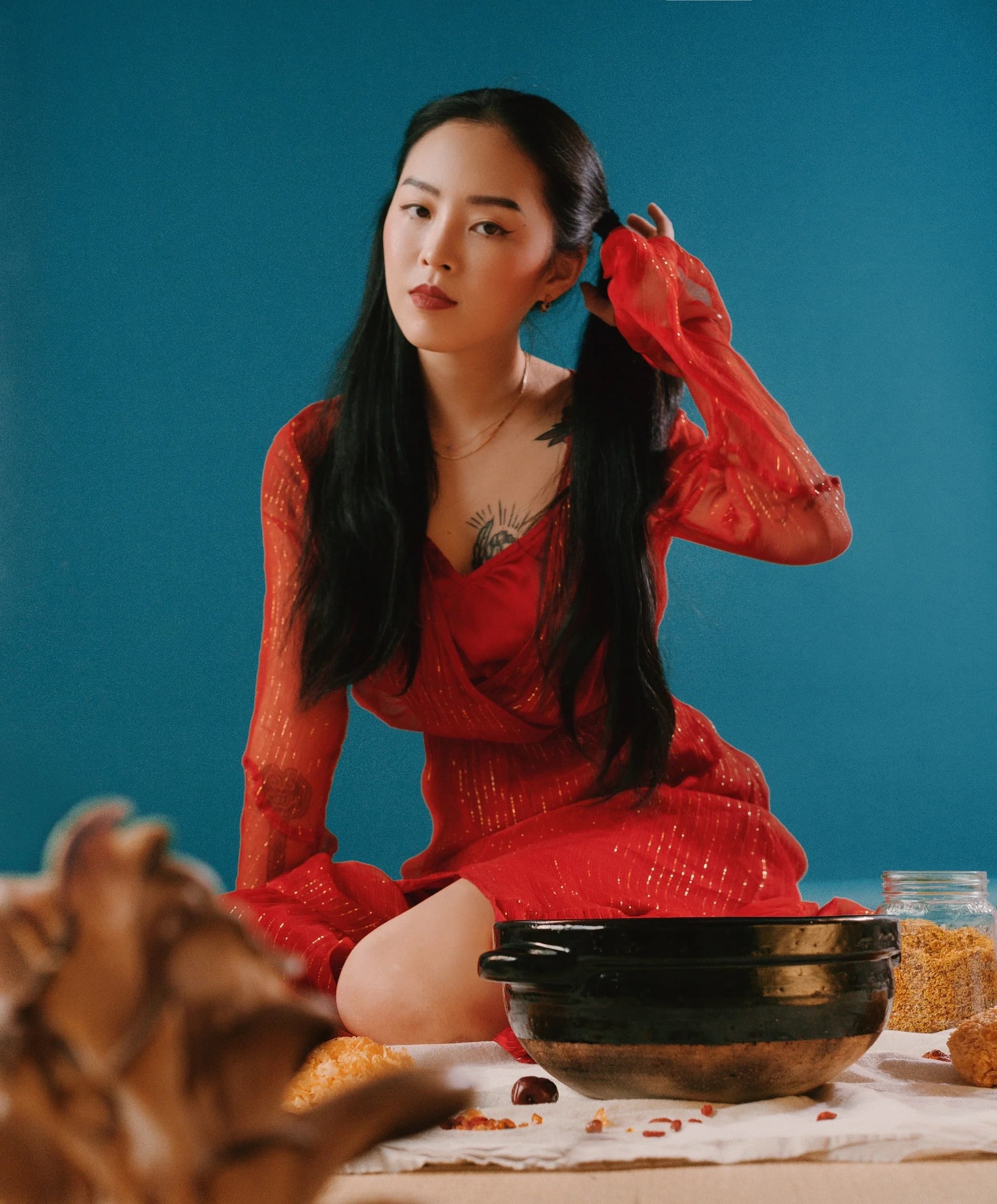
🇨🇳Zoey Xinyi Gong
Registered Dietitian & TCM Food Therapy Educator
Zoey Xinyi Gong occupies a distinctive position in the wellness landscape: a clinically trained registered dietitian who is also deeply rooted in Traditional Chinese Medicine food therapy, a system of nutritional healing that has been practiced continuously for over three thousand years. Chinese-American by background, Gong grew up immersed in TCM food principles passed down through her family — the medicinal soups her grandmother prepared, the seasonal eating patterns that shifted with the lunar calendar, the intuitive understanding that food is not merely fuel but medicine. She later formalized her nutrition training through a Western clinical dietetics program, earning credentials that allow her to bridge two systems of knowledge that rarely speak to each other.
Overview
Gong's protocol does not ask people to choose between Eastern and Western nutritional science. Instead, it demonstrates that these traditions, developed independently over millennia, converge on many of the same principles — and that each fills gaps in the other. Western clinical nutrition excels at quantifying macronutrients, micronutrients, and biochemical mechanisms. TCM food therapy excels at personalization, seasonal attunement, and understanding how foods affect the body's energetic and functional state in ways that laboratory analysis alone cannot capture.
Her approach resonates with a growing audience that is skeptical of both the rigid calorie-counting of conventional dietetics and the unsubstantiated claims of wellness influencers. Gong offers something different: a food-as-medicine framework that is ancient in origin, practically tested across billions of meals over thousands of years, and increasingly validated by modern research into phytochemistry, the gut microbiome, and chronobiology.
Warming, Cooling, and the Thermal Nature of Food
The foundational concept in TCM food therapy that distinguishes it from Western nutrition is the thermal nature of food — the idea that every food has an inherent warming, cooling, or neutral effect on the body that is independent of its physical temperature. Ginger, cinnamon, and lamb are warming foods that stimulate circulation, boost metabolism, and are prescribed for cold constitutions or cold-weather months. Cucumber, watermelon, and mung beans are cooling foods that clear heat, reduce inflammation, and are appropriate for hot constitutions or summer eating.
Gong explains this framework not as mysticism but as an empirical classification system refined over millennia of clinical observation. She notes that modern research increasingly supports aspects of this classification — ginger's thermogenic properties, for instance, or the anti-inflammatory effects of cooling foods like cucumber and green tea. She teaches her audience to read their own body's signals: persistent feelings of coldness, sluggish digestion, and fatigue suggest a need for warming foods, while irritability, inflammation, and excess heat suggest cooling foods are called for.
This personalized approach contrasts with the one-size-fits-all dietary prescriptions common in Western wellness culture. Rather than declaring a single food universally good or bad, TCM food therapy asks: good or bad for whom, and when?
Seasonal Eating
Seasonal eating in TCM is not merely about eating what is locally available — though it includes that — but about aligning food choices with the body's changing needs across the annual cycle. Spring eating emphasizes green, sprouting foods that support the liver and facilitate the body's natural detoxification after winter's heavier diet. Summer calls for cooling, hydrating foods that prevent heat accumulation. Autumn focuses on moistening foods that protect the lungs and skin as the air dries. Winter demands warming, nourishing foods that build and conserve energy.
Gong translates these seasonal principles into practical meal planning: light vegetable-heavy meals in summer, hearty bone broths and root vegetables in winter, cleansing greens and sprouts in spring, and nourishing stews with pears and white fungus in autumn. This cyclical approach to eating mirrors emerging research in chronobiology suggesting that metabolic processes, immune function, and nutritional needs do shift meaningfully across seasons — a finding that static, year-round dietary prescriptions fail to account for.
Medicinal Soups and Congee
Soups hold a central place in Gong's protocol, reflecting the TCM principle that cooked, warm foods are easier for the body to digest and assimilate than raw foods. She teaches her audience to prepare medicinal soups using a combination of culinary ingredients and traditional Chinese herbs — astragalus root for immune support, goji berries for eye health and vitality, red dates (jujube) for blood nourishment, and dried longan for calming the spirit.
Congee — rice porridge slow-cooked to a silky consistency — is presented as one of the most versatile healing foods in the TCM repertoire. Easy to digest and infinitely customizable, congee serves as a vehicle for therapeutic additions: ginger and scallion congee for early-stage colds, sweet potato congee for digestive support, black sesame congee for nourishing the kidneys and hair. Gong positions congee as the TCM equivalent of chicken soup — a universal comfort food that also happens to be a sophisticated delivery system for therapeutic compounds.
Qi-Building Nutrition
The concept of qi — vital energy — is central to TCM and informs Gong's approach to food selection. Qi deficiency, characterized by fatigue, weak digestion, shortness of breath, and low immunity, is one of the most common patterns she addresses. Qi-building foods include sweet potatoes, rice, oats, chicken, mushrooms (particularly shiitake and maitake), and warming spices.
She connects the TCM concept of qi to modern understanding of mitochondrial function and cellular energy production, noting that many qi-building foods are rich in B vitamins, complex carbohydrates, and compounds that support metabolic efficiency. Fermented foods — including traditional Chinese fermented vegetables, miso, and naturally fermented soy — support both gut health and qi by improving nutrient absorption and microbial diversity.
Modern Supplements and Functional Foods
While Gong's protocol is overwhelmingly food-based, she incorporates select supplements and functional foods that bridge TCM and Western evidence. Green tea is recommended daily for its catechin content and its TCM classification as a cooling beverage that clears heat and supports mental clarity. Turmeric, used in both Chinese and Ayurvedic traditions, is recommended for its anti-inflammatory properties. Omega-3 fatty acids support cardiovascular and cognitive health. Berries — including goji berries from the TCM tradition and blueberries from Western research — provide antioxidant protection. Probiotics supplement the fermented foods that are already integral to her dietary recommendations.
What Makes It Unique
Zoey Gong's TCM Food Therapy Protocol is unique because it brings one of the world's oldest and most sophisticated nutritional systems into conversation with modern science — without reducing either tradition to the other. Her work demonstrates that TCM food therapy is not a collection of folk remedies to be cherry-picked by the supplement industry but a comprehensive, internally coherent system of nutritional medicine that deserves serious engagement from the broader longevity community. For audiences seeking a more intuitive, seasonally attuned, and personalized approach to eating than conventional nutrition offers, Gong provides a framework that is both ancient and urgently relevant.
Recommended Products
Green Tea (Matcha)
foods
Turmeric / Curcumin
supplements
Fermented Foods (Kimchi, Sauerkraut, Kefir)
foods
Mixed Berries (Blueberries, Blackberries)
foods
Omega-3 Fish Oil (High EPA)
supplements
Probiotics (Multi-Strain)
supplements
Grass-Fed Ghee
foods
Broccoli
foods
Extra Virgin Olive Oil
foods
Bone Broth
foods
Raw Honey
foods
Links may earn us a commission at no extra cost to you.
Compare Zoey Xinyi Gong With...
Get More Protocol Breakdowns
Weekly deep dives into longevity protocols, product reviews, and the latest research — delivered to your inbox.